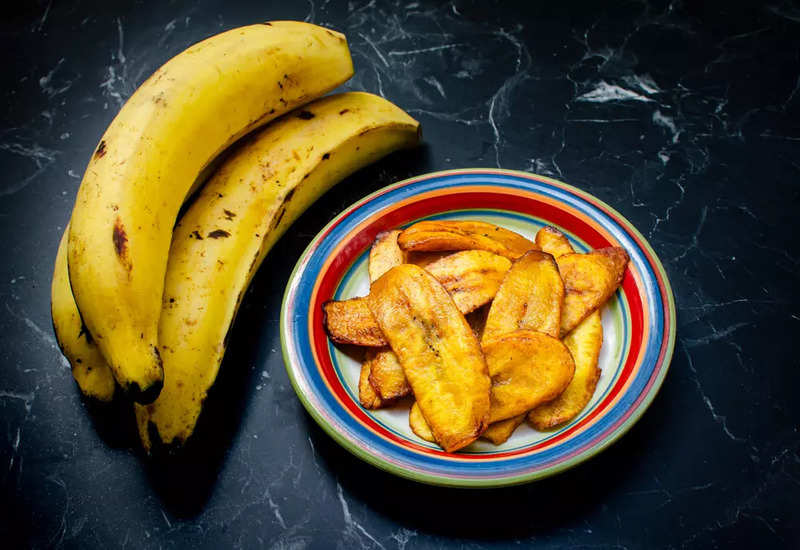
Plantains are often mistaken for bananas since they look the same. However, unlike bananas, plantains are tougher, starchier and slightly larger. In many parts of the world, plantains are a staple food and a source of starch. They replace rice, wheat, potatoes and other forms of carbs.
What are plantains?
Plantains are a variety of bananas and are called banana cultivars. They are also known as "cooking bananas" since they have resilient and tough flesh that can withstand frying, boiling and steaming.
They are widely consumed in West and Central Africa, the Caribbean islands, Central America, and northern South America.
Plantains are also consumed in the Indian state of Kerala where it's called nendrapazham or nendran banana. It's often consumed raw or boiled. Cooked nendrans are often drizzled with ghee and sugar and relished as a delicacy.
While ripe plantains can be eaten without cooking, they are usually boiled, fried or dried and powdered before consumption. The flesh is tough in its uncooked form but becomes soft and yielding when it's steamed, fried or boiled.
Fried plantains taste a lot like potatoes but contain more fibre. They are generally served as a side with meat and fish preparations in Africa and South America.
Plantain flour is gluten-free and can be used to bake breads, cakes and pancakes.
These high-fibre fruits are also a source of many important nutrients, providing nutrition to countries where food storage or transportation is tough. In Africa alone, plantains cater to 25% of the caloric requirements of the continent's population.
Also Read: Banana- Nutritional Benefits
Plantain nutrition and calories
A 100 gram serving of plantain contains the following calories:
| Nutrients | Measure (Daily Value) |
| Calories | 122 |
| Fat | 0.4gm |
| Sodium | 4mg |
| Potassium | 499mg (14%) |
| Carbohydrates | 32gm (10%) |
| Fibre | 2.3gm (9%) |
| Sugar | 15g |
| Protein | 1.3gm |
| Vitamin C | 30% |
| Iron | 3% |
| Vitamin B6 | 15% |
| Magnesium | 9% |
Health benefits of plantains
Plantains are a staple food in many parts of the world. In fact, it's the 10th most important staple globally. It is a rich source of carbohydrates in places where there are grain shortages. It's a rich source of potassium and magnesium just like bananas. It also contains micronutrients like vitamin B6 and C, and iron.
Plantain also contains dietary fibres and traces of beta carotene.
Let's look at some of the health benefits of plantains.
1. Good for heart health and reducing blood pressure
Plantains contain potassium, a mineral important for heart health. It regulates the contractions of the heart and maintains a regular heartbeat. Potassium also benefits cardiovascular health by lowering blood pressure.
2. Good remedy for constipation
If you want to add some fibre to your diet, replace potatoes and grains with plantains as your carb source. The dietary fibres in plantains are good for overall digestive health and helps relieve constipation. The peels of plantain, while tough, are also edible.
They are a good source of dietary fibre and antioxidant phytochemicals. These fibres also act as prebiotics, feeding the good bacteria in the gut.
3. Helps manage diabetes
Plantains did not enjoy a good reputation among doctors for diabetes. But in Nigeria, plantains are eaten as a diabetes remedy.
The fruit ranks low on the glycaemic index. Ripe ones rank at 54.6 and unripe plantains at 45.3. If prepared and served in the right way, plantains do not have any adverse effects on blood sugar. In fact, unripe plantains could have a hypoglycaemic effect.
A study suggests that boiled unripe plantains have a more beneficial effect on blood glucose levels and could be used in the management of diabetes.
A 2015 study on rats said that unripe plantain contains compounds that could also treat acute pancreatitis seen in type 2 diabetes.
Since plantains are rich in antioxidants, they can also improve insulin sensitivity and reduce type 2 diabetes risk.
4. Helps lower blood pressure
Plantains are rich in potassium, which is good for heart health. When there is excess sodium in the body, it starts retaining water, putting pressure on the blood vessels and the heart. This causes high blood pressure.
Potassium helps lower blood pressure by removing excess sodium and relieving the stress on the cardiovascular system.
Other benefits of plantains include:
- Aids weight loss
- Gluten-free
- Good for digestive health
- Boosts immune system
- Rich in antioxidants
- Prevents inflammation
Plantains vs bananas: What's the difference?
Plantains and bananas look the same and may share some of the nutritional profile. That's because they belong to the same family. However, plantains are larger and are starchier than bananas.
Plantain flesh is also are also more resilient than bananas and can withstand frying and steaming without disintegrating. Hence they are often referred to as "cooking bananas" in culinary parlance.
Plantains are also less sweet than bananas and also have a longer shelf life.
Plantain recipes
In the Indian state of Kerala, plantains are consumed on a daily basis in raw and cooked forms. Raw plantains are used in dry subzis. The famous Kerala banana chips are made of the unripe nendran banana. Here are some great plantain recipes to try.
Steamed nendran recipe: Peel ripe nendran plantains and place them in a steamer. Steam them for over 10 minutes till the colour of the plantains turns into a bright yellowish-orange and the flesh turns a little translucent. Slice them up and drizzle some homemade ghee on top. Add sugar to taste.
Tostones recipe: Skin raw plantains and cut them up into 1 inch thick pieces. Fry the plantain pieces on both sides on a skillet for 3 minutes. After they have cooled, flatten the fried plantain pieces by pressing them with the underside of a glass or a bowl. Dip each piece in water and fry them on both sides again. Sprinkle a little salt before serving.
Fried ripe plantain recipe: Skin the ripe plantain and slice it into 1-inch pieces. Heat ghee or butter in a skillet. Place the plantain slices on the skillet and fry on each side. The sugars will caramelise to form a nice crust. Serve with a sprinkling of salt. You can also serve them with ice cream.
Pazhampori recipe: This delightful Kerala snack can be prepared by slicing 2-3 ripe plantains lengthwise. Prepare a batter by mixing 1/2 cup rice flour and 1/2 cup refined flour or wheat flour. Add 2 tablespoons of sugar to the batter. Dip the nendran slices and deep fry in coconut oil. Serve hot with tea.
References:
1. Oyeyinka, B. O., & Afolayan, A. J. (2020). Comparative and Correlational Evaluation of the Phytochemical Constituents and Antioxidant Activity of Musa sinensis L. and Musa paradisiaca L. Fruit Compartments (Musaceae). TheScientificWorldJournal, 2020, 4503824. https://doi.org/10.1155/2020/4503824
2. Lewis DA, Fields WN, Shaw GP. A natural flavonoid present in unripe plantain banana pulp (Musa sapientum L. var. paradisiaca) protects the gastric mucosa from aspirin-induced erosions. J Ethnopharmacol. 1999 Jun;65(3):283-8. doi: 10.1016/s0378-8741(99)00005-7. PMID: 10404428.
3. Beara IN, Lesjak MM, Jovin ED, Balog KJ, Anackov GT, Orcić DZ, Mimica-Dukić NM. Plantain (Plantago L.) species as novel sources of flavonoid antioxidants. J Agric Food Chem. 2009 Oct 14;57(19):9268-73. doi: 10.1021/jf902205m. PMID: 19754195.
4. Lamptey R, Velayoudom FL, Kake A, E Uloko A, Rhedoor AJ, Kibirige D, Ndour Mbaye NM, Sobgnwi E, Kalra S. Plantains: Gluco-friendly usage. J Pak Med Assoc. 2019 Oct;69(10):1565-1567. PMID: 31622319.
5. Arun KB, Persia F, Aswathy PS, Chandran J, Sajeev MS, Jayamurthy P, Nisha P. Plantain peel - a potential source of antioxidant dietary fibre for developing functional cookies. J Food Sci Technol. 2015 Oct;52(10):6355-64. doi: 10.1007/s13197-015-1727-1. Epub 2015 Jan 15. PMID: 26396380; PMCID: PMC4573141.
6. Eleazu CO, Okafor P. Use of unripe plantain (Musa paradisiaca) in the management of diabetes and hepatic dysfunction in streptozotocin induced diabetes in rats. Interv Med Appl Sci. 2015 Mar;7(1):9-16. doi: 10.1556/IMAS.7.2015.1.2. Epub 2015 Mar 20. PMID: 25838921; PMCID: PMC4369141.
7. Effects of various processing methods of ripe and unripe plantain diets on blood glucose level. Ogbuji, C.A.1 *, Odom, T.C.1 , Ndulaka J.C., 2 and Ogbodo, M. O.2
Disclaimer:
“The recipes, food, its nutritional value or any other information are developed/shared by expert professionals as per their skill levels. The website shall not be responsible for any consequences arising as a result of using or following any information given in this video/article. Viewers discretion advised.”