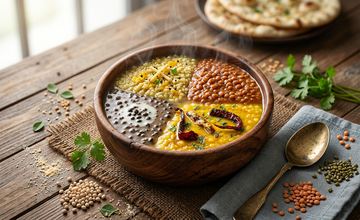
Ranking of Indian dals by protein content from highest to lowest

Protein has emerged as a focal point in contemporary nutrition discussions. Supermarkets brim with protein bars and shakes, while social media buzzes with meticulous gram calculations. However, Indian households have long embraced dal as a simple, economical protein source. Vital for muscle repair, enzyme and hormone production, immune support, and satiety, protein is crucial. The Indian Council of Medical Research (ICMR) recommends that an average healthy adult consumes approximately 0.8-1 gram of protein per kilogram of body weight daily. For a 60 kg individual, this translates to about 48–60 grams of protein each day, with increased needs for those who are active, pregnant, breastfeeding, or elderly. Although dal alone may not fulfill the entire daily protein requirement, it stands as one of India's most abundant plant-based protein sources. When combined with rice or rotis, it creates a more complete protein profile, sustaining generations well before the advent of protein powders. Below, we explore the highest-protein Indian dals, ranked from the richest to the least.


Updated: Jul 1, 2026 | 15:47 IST
User

Protein has emerged as a focal point in nutrition discussions, with a surge in products like protein bars and shakes dominating supermarket shelves and social media feeds. However, long before this trend took hold, Indian kitchens had already embraced dal as a staple source of protein. Essential for muscle repair, enzyme and hormone production, immune support, and satiety, protein plays a crucial role in overall health. The Indian Council of Medical Research (ICMR) recommends that an average adult requires approximately 0.8 to 1 gram of protein per kilogram of body weight daily. For a person weighing 60 kg, this translates to about 48 to 60 grams of protein each day, with higher needs for those who are active, pregnant, breastfeeding, or elderly.
While dal alone may not fulfill the entire daily protein requirement, it stands out as one of the richest plant-based protein sources in India. When paired with rice or rotis, dal forms a complete protein, providing nourishment that has sustained generations long before the advent of protein powders. Among the various types of dal, ranks highest, offering approximately 25 grams of protein per 100 grams when dry. Known for its creamy texture in dishes like dal makhani and as a key ingredient in idlis and dosas, urad dal is also rich in iron, calcium, magnesium, and dietary fiber, making it a nutrient-dense option.
, also providing around 24 grams of protein per 100 grams, cooks quickly and retains high nutritional value, offering generous amounts of iron, folate, and fiber while complementing spices beautifully.
Toor dal, a familiar presence in Indian households, contains approximately 22 grams of protein per 100 grams. It serves as a steady source of plant protein and is rich in potassium, folate, and complex carbohydrates, which provide sustained energy. Horse gram, though less popular, also boasts a protein content of about 22 grams per 100 grams and is exceptionally high in fiber and polyphenols, making it a nutritious addition to soups and curries.
Chana dal, derived from splitting Bengal gram, offers around 21 grams of protein per 100 grams and is known for its nutty flavor and firm texture, suitable for a variety of dishes. Whole green moong, comparable in protein content to split moong, provides additional fiber due to its outer skin, enhancing digestive health. Lastly, moth beans, popular in western India, deliver about 23 grams of protein per 100 grams and are rich in fiber, iron, and antioxidants, with sprouted varieties gaining popularity for their improved nutrient availability and crunchy texture.

protein nutrition

Indian dals

urad dal

moong dal

masoor dal

Disclaimer:
“The recipes, food, its nutritional value or any other information are developed/shared by expert professionals as per their skill levels. The website shall not be responsible for any consequences arising as a result of using or following any information given in this video/article. Viewers discretion advised.”
Top Comments