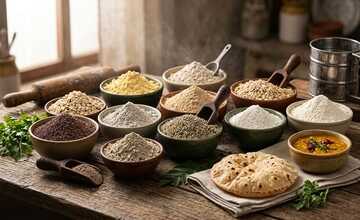
In Indian kitchens, a variety of flours can be found, each contributing to the rich tapestry of regional cuisines. While remains a staple, alternatives such as millets, gram flour, and rice flour have been integral to traditional cooking for centuries. As health consciousness rises among consumers, these lesser-known flours are experiencing a resurgence. The ideal flour choice varies based on individual dietary needs, activity levels, and health conditions, but generally, less processed flours that are higher in fiber, protein, and essential minerals are considered more nutritious than their refined counterparts.
Ragi, often hailed as a nutritional powerhouse, has been a dietary staple in southern India long before the term "superfood" gained popularity. Rich in calcium, fiber, and iron, ragi is known for its ability to promote satiety, keeping hunger at bay longer than many refined grains. Although its earthy flavor may require some adjustment, incorporating ragi into everyday meals can be easily achieved by mixing it with wheat flour for dishes like rotis and dosas.
Jowar, another grain gaining recognition, is naturally gluten-free and packed with fiber, magnesium, and iron. Its slower digestion rate provides sustained energy, making it a healthier alternative to refined flour. Soft jowar rotis, when paired with dal or sabzi, offer a nourishing meal option. Similarly, bajra, traditionally associated with winter fare, boasts a well-rounded nutritional profile, including fiber and plant protein, making it a filling choice year-round.
Besan, or gram flour, showcases that healthy eating can be flavorful. With a higher protein content than many cereal flours and being gluten-free, besan is versatile in the kitchen. It can be used in various dishes, from breakfast chillas to lunch kadhi, enhancing both taste and nutrition effortlessly. Whole wheat flour, or atta, remains a daily favorite in many households, retaining the bran and germ of the grain, thus providing more fiber and nutrients than refined wheat flour.
Oat flour, though not traditionally Indian, has gained popularity for its heart-healthy soluble fiber, beta-glucan. While it may not be suitable for making soft rotis on its own, it works well when combined with whole wheat flour in pancakes and baked goods. Rice flour, essential in southern and northeastern Indian cuisines, is gluten-free and easily digestible, though it contains less fiber and protein compared to whole-grain flours. Lastly, maida, the most refined flour, ranks lower nutritionally due to the loss of fiber and nutrients during processing. While occasional consumption is acceptable, relying on maida daily can lead to missed opportunities for a more balanced diet rich in whole grains.