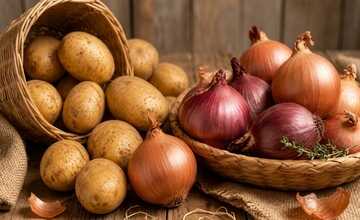
A basket of onions alongside a sack of potatoes has long been a staple in kitchens and pantries. While both vegetables are essential pantry items that can last longer than many fresh produce options and do not require refrigeration, they have distinct storage needs that can affect their longevity. Understanding the biological differences between these two crops is crucial for maintaining their freshness. Onions, which are bulbs, undergo a curing process to reduce moisture, while potatoes, as living tubers, continue to respond to environmental factors after harvest.
The incompatibility of storing potatoes and onions together stems from their differing storage requirements. While they may complement each other in recipes, their proximity can lead to accelerated spoilage. Potatoes can absorb the odors emitted by onions, and the conditions that favor one crop can be detrimental to the other. According to the EcoServants Project, onions release ethylene gas during their natural aging process, which can act as a plant hormone, prompting nearby potatoes to sprout prematurely, especially in poorly ventilated storage areas.
Potatoes thrive in cool, dark, and well-ventilated environments, ideally at temperatures between 45 and 50 degrees Fahrenheit (7 to 10 degrees Celsius). Exposure to light can cause green patches to form on their skin, while warmer temperatures can lead to sprouting. Refrigeration is not advisable, as it alters the starches in potatoes, converting them into sugars, which can negatively impact flavor and cooking quality. Proper air circulation is also essential; potatoes should be stored in baskets or paper bags that allow moisture to escape gradually.
In contrast, onions require a different approach to storage. They are cured before reaching the market, which helps them retain their usability for extended periods. Onions prefer cool, dark, and dry conditions, as excess moisture can lead to mold and spoilage. Ventilated containers such as mesh bags or wire baskets are recommended for optimal storage. Notably, pungent onion varieties tend to have a longer shelf life than sweet onions, which contain more water and should be used more quickly.
To maximize the freshness of both potatoes and onions, it is essential to store them separately. Potatoes should be kept in a cool, dark place, away from direct sunlight and sealed environments, while onions should be stored in dry, ventilated containers, away from ethylene-producing fruits. Regularly checking for bruised or sprouting potatoes and using sweet onions sooner can further enhance the longevity of these kitchen staples.